
Reserve a table today with our easy online booking form.

A. 250 Huntington Ave., Boston, MA 02115
P. (617) 867-9999
Reserve a table today with our easy online booking form.
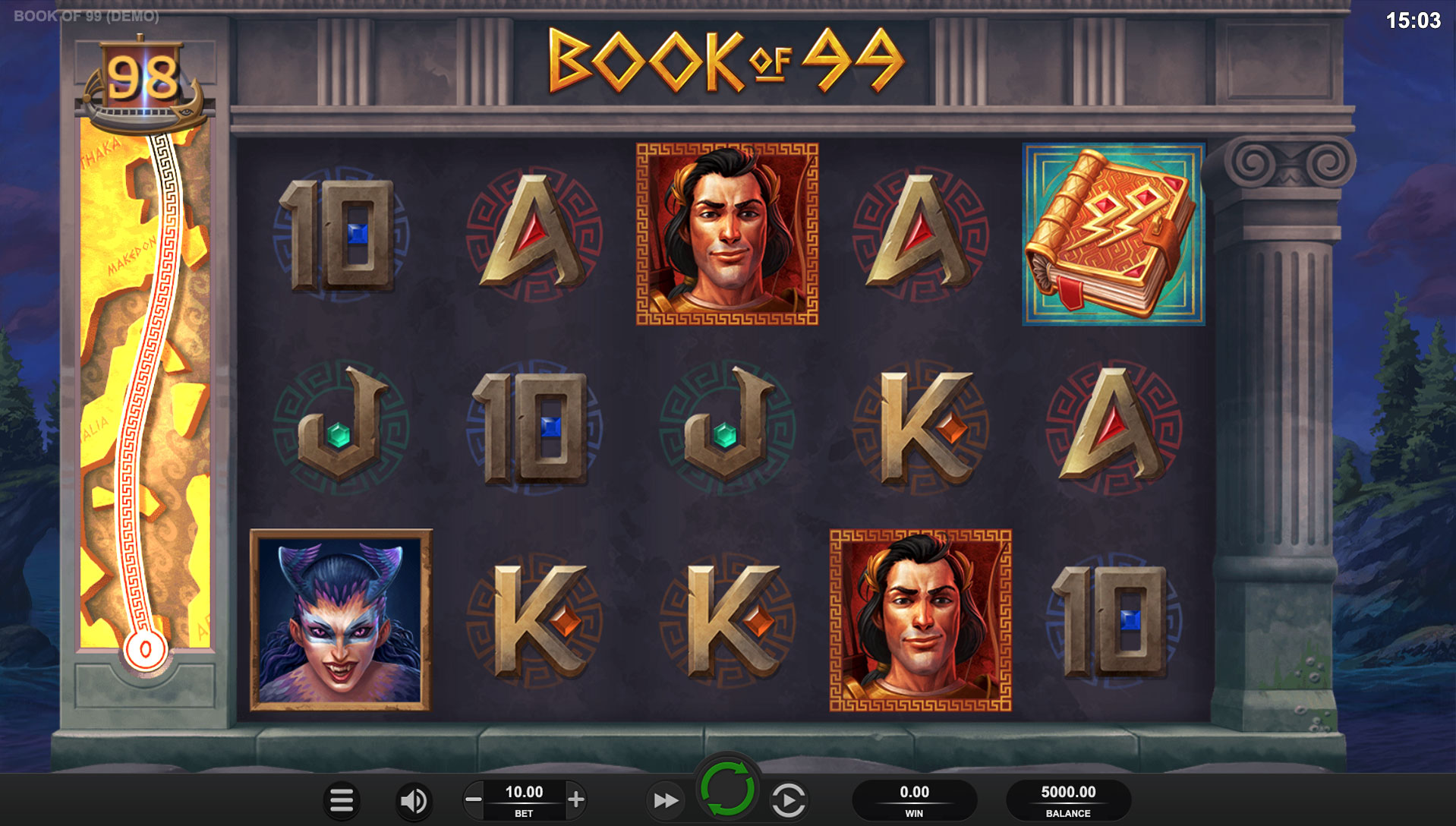
As a person who critiques online games and follows cultural developments, I observe an intriguing overlap where story-driven online slots intersect with actual art. Consider Book of 99. This slot game blends Egyptian-inspired style with a modern, design-oriented approach. It is not merely another game in a crowded market in the UK. It reads akin to an artifact of culture. This article looks at Book of 99 as a sort of virtual ‘art show’. It cuts through the usual slot game noise to appeal to British players who appreciate design, story, and seamless gameplay. We’ll pull apart its gameplay mechanics, its aesthetic, and its standing in British online entertainment. This transcends looking at paylines. We aim to interpret its cultural significance.
Slot machine imagery traditionally meant fruits, bells, and lucky sevens. Now, we observe more complex themes. Powered By Real Time Gaming Book Of 99 Slot of 99 sits at the peak of this change. It presents itself as a curated visual and sound experience, not just a luck game. Its backdrop depicts a stylised desert under a twilight sky, more like a painting than a casino. The symbols—a scarab, an ankh, a deity—come from Egyptian myth. But their rendering employs clean, contemporary graphic design. They feel closer to a graphic novel or digital art piece than old casino fixtures. For UK players, accustomed to high production in TV and apps, this better aesthetic counts. It satisfies a desire for entertainment that does more than offer a possible win. It must also be visually pleasing and build a consistent mood. This change reflects a wider UK trend where design quality sets products apart.
Let’s extend that ‘art fair’ idea. Examine the game’s main feature: the Expanding Symbol. This mechanic lets a single symbol spread to cover a whole reel during free spins. View it as the centrepiece installation in a gallery. It transforms the standard 5×3 grid into a dynamic space. One powerful image can dominate the view, creating high drama and potential. Each spin becomes a show. It’s a opportunity to see how the ‘art’—the chosen symbol—fills the space of the reels. The ‘Book’ acts as both curator and host. It’s the wild and scatter symbol that starts the main event. This setup asks players to see the symbols as parts of a visual tale, not just holders for cash value. The game builds anticipation. The artistic reward of a full-screen expansion ties directly to the financial outcome. This fusion works well for the UK market, which often takes an analytical approach.
The UK has one of the world’s most mature online gaming markets, overseen by the UK Gambling Commission. Here, basic function isn’t enough. A product needs a special experience to attract attention. Book of 99 enters with a clear deal: high volatility combined with a 99% Return to Player (RTP). This technical detail is a type of brutalist art. It’s an uncompromising, transparent declaration. It caters to the UK player’s preference for fairness and clear data, values supported by strict local laws. Also, the game’s mobile-optimised layout means this artistic encounter isn’t restricted to a desktop. It’s reachable anywhere, integrating into the on-the-go routine common in UK cities. Its appeal on platforms British users use shows a successful match. Its artistic concept matches with the practical demands and sharp expectations of this demographic.
Why would an old Egyptian motif resonate in modern Britain? The link isn’t straightforward culture. It’s the ongoing British captivation with heritage, ancient studies, and the unknown. From the Egyptian rooms at the British Museum to mainstream historical shows, Egyptology occupies a firm spot in the UK’s collective imagination. Book of 99 taps this established curiosity but channels it via a contemporary digital lens. It doesn’t demand expert understanding. It provides a stylised, user-friendly interpretation of the look. The ‘Book’ represents the mystery, an ancient manuscript brimming with secrets and might. It’s a plot trope typical of British action series and cinema. The game encapsulates this historical intrigue into a modern format. It seems well-known but fresh, letting users experience a slice of mythologized lore by means of the very modern act of digital spinning.
The central mathematical framework of Book of 99 is its most daring artistic statement. A almost ideal 99% RTP is unusual, notably when coupled with strong variance. This combination creates a particular psychological profile. The high RTP implies a slot that, over a extended hypothetical timeframe, reverts virtually all wagers. It encourages a sense of sustainability and benefit. The high volatility means outcomes are pronounced. Users see periods of minor gains, broken up by the opportunity for big, explosive payouts in free spin rounds. For the UK player, this is a trade-off between engagement and excitement. The slot demands patience. It repays that patience rather than a steady trickle of returns, but rather the assurance of a significant, memorable highlight. This approach appeals to a certain player type. It’s for players who accept risk, who value transparent odds, and who want the peak of a big payout rather than the pattern of regular, small wins.
You cannot talk about the game’s artistic merit without referring to its sound. The audio in Book of 99 is a textbook example in establishing mood. It bypasses the garish, celebratory fanfares common to many slots. Instead, you experience a haunting, melodic soundtrack. You detect ambient desert winds, subtle chimes, and deep, resonant bass notes during spins. The sound effects for wins are satisfying but integrated. They never pull the player out of the immersive experience. This careful audio design aligns with the visual aesthetic. It forges a complete sensory environment. It appears deliberate, composed, like an audio installation in a modern art show. For a player in a busy British home or on a train commute, this sound design provides escapism. It’s a short auditory trip to a different, stylised world. That lift enhances the overall user experience well beyond the visuals alone.
Stack Book of 99 against other Egyptian-inspired slots, and its distinctive approach intensifies. Several games in this genre clutter the screen. They employ gold trinkets, comical pharaohs, and disorderly animation. Book of 99 chooses minimalistic elegance. Its colour palette is muted. Its motions are fluid and purposeful, not gaudy. The ‘Break’ in its title, part of our ‘Art Fair Break’ concept, represents this intentional deviation. It moves away from genre stereotypes to give a more sophisticated, design-literate interpretation. In the UK market, players have countless options. This differentiation is essential. It frames the game not as a standard item, but as a high-end product with a specific artistic vision. It attracts an crowd that might avoid flashier products. It appeals to those who like nuance, minimal design, and a understated ‘casino’ vibe in their games.
Any online product’s layout meets a ultimate test: mobile performance. Book of 99 conquers the benchmark. It puts its ‘gallery’ straight into the gamer’s grip. The layout stays clean and uncluttered on mobile screens. All clickable items are perfectly sized for touch controls. The visuals stays strong. The expanding symbol element retains all its effect on a smartphone display. This perfect adaptation for mobile is vital for the UK market. The nation has very high smartphone use and a culture of mobile-first entertainment. The chance to engage with this aesthetically considered experience during a lunch break or commute makes its digital art accessible to all. It transforms into a part of everyday digital habits, no longer limited to a desktop.
Beyond mechanics and visuals, we should examine the cultural impact and psychological pull of Book of 99. It works within a context British culture audiences recognise: the ‘limited edition’ or the ‘featured exhibition.’ The game is a unique experience, a exclusive display. This framing influences how players engage with it. They believe they’re interacting with something singular, a ‘departure’ from the ordinary. The high volatility model feeds a narrative of searching for a masterpiece payout, one game-changing win. This fits an ambitious outlook, a cultural trope recognised in a society that appreciates discovery and windfall stories. The game wraps this psychological hook in an artistic presentation. The quest feels more elevated, more like a quest for a rare treasure than a simple wager. That can intensify a player’s involvement and emotional investment.
The success of games like Book of 99 indicates a potential future for online slot design, especially for the picky UK market. We foresee more emphasis on unified theme execution, high production values, and mathematical models that are not just fair but also intriguingly transparent or unique. The boundary between game design and experiential digital art will persist blurring. Developers will need to think like curators. They’ll have to balance narrative flow, visual harmony, and auditory mood as thoroughly as payout structures. For the UK audience, with its strong consumer protections and refined taste for digital media, this is encouraging. It drives the industry toward more creativity and sophistication. It offers entertainment that can be enjoyed on several levels, even after the reels stop. Book of 99 might well be seen as a precursor in this shift.
Book of 99 signals a clear step forward in the online slot genre for the UK market. It functions as a digital art fair. It departs from traditional gaudiness to present a curated, sophisticated experience. It combines a minimalist Egyptian aesthetic with transparent, high-stakes mechanics. Its near-perfect RTP and high volatility suit a specific, analytically-inclined player psychology. Its flawless mobile design slots into modern British life. The game thrives by merging art and algorithm. It offers more than a chance to win. It delivers a visually and sonically cohesive journey. It demonstrates the growing demand for design-literate, immersive entertainment in the UK’s digital landscape. The game establishes a new benchmark for what a thematic slot can be.